

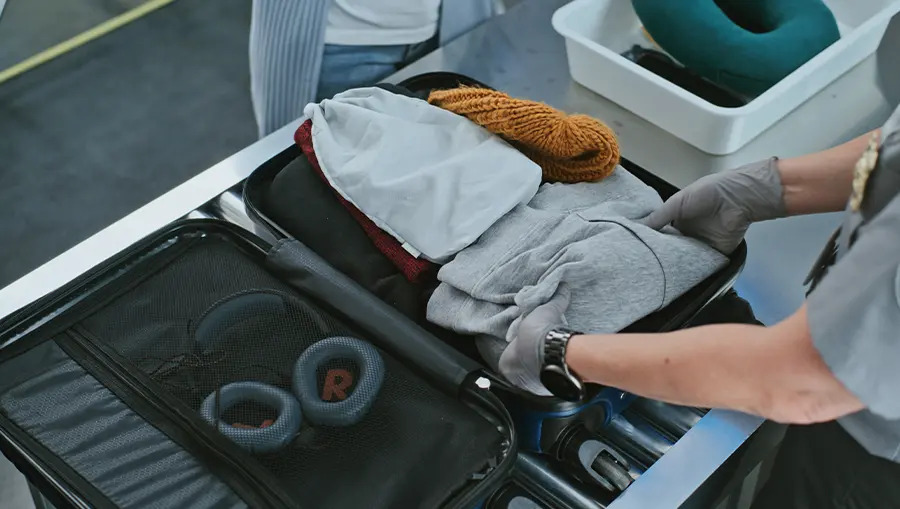

Packing for a flight seems simple — until you reach airport security and realize that something in your bag isn’t allowed. Even frequent flyers are often surprised by the number of unexpected items banned from hand luggage on US flights.
The Transportation Security Administration (TSA) enforces strict rules to keep passengers safe, and some of these regulations can catch travelers off guard. From everyday grooming tools to souvenirs and snacks, it’s easy to make mistakes when preparing carry-on bags.
This guide explains which items are prohibited, why they’re restricted, and how to avoid delays or confiscations at airport checkpoints.
Understanding TSA’s Role in Flight Safety
The TSA (Transportation Security Administration) oversees all security screenings for passengers flying within, to, or from the United States.
Their primary goal is to ensure aircraft safety and security by limiting dangerous, flammable, or potentially weaponized items from entering the cabin.
Items are classified into:
- Allowed in carry-on and checked luggage
- Allowed in checked luggage only
- Completely prohibited from all luggage
Knowing which category your belongings fall under is key to a smooth travel experience.
The “3-1-1” Rule for Liquids — Still in Effect
Most travelers know about TSA’s 3-1-1 liquids rule, but it still causes confusion.
Here’s a quick refresher:
- 3: Each container must be 3.4 ounces (100 milliliters) or less.
- 1: All containers must fit in one clear quart-sized zip-top bag.
- 1: Each passenger is allowed one such bag in their carry-on.
That means full-sized shampoo bottles, drinks, or even large jars of peanut butter must go in checked luggage — or be left behind.
💡 Tip: TSA considers gels, pastes, creams, and aerosols as liquids — so this includes lotions, toothpaste, hair gel, and yogurt cups.
Unexpected Everyday Items You Can’t Bring in Hand Luggage
While weapons and explosives are obviously banned, many travelers are surprised to find common household or personal items restricted as well.
Here are some of the most unexpectedly banned or limited items for US carry-on bags:
Sports and Workout Equipment
Even small items can be considered potential weapons.
- Not allowed: Baseball bats, golf clubs, hockey sticks, pool cues, hiking poles.
- Allowed: Small fitness bands, non-weighted jump ropes, and yoga straps.
Light exercise gear is fine — just avoid anything that could be used as a blunt object.
Tools and Work Equipment
Many tools fall under security restrictions because they could be used to damage cabin structures.
- Not allowed: Screwdrivers longer than 7 inches, wrenches, pliers, hammers, and drills.
- Allowed: Small, non-sharp tools (under 7 inches) or plastic models used for crafts.
Certain Food Items
You might think snacks are harmless — but texture matters.
- Not allowed in large quantities: Yogurt, peanut butter, hummus, soup, or creamy cheese spreads (classified as “liquids”).
- Allowed: Solid foods like sandwiches, chips, granola bars, fruits, or cookies.
- Tip: If it can spill, smear, or pour — it’s treated as a liquid.
Batteries and Electronics
Lithium batteries can overheat or cause fires, which is why they have special rules.
- Allowed only in carry-on: Spare lithium-ion batteries, power banks, and e-cigarettes.
- Not allowed in checked luggage.
- Installed batteries (inside laptops, tablets, phones) are fine in either bag.
Always pack spares in your carry-on and keep them protected from short-circuiting.
Sharp Personal Items
Some grooming or crafting tools can raise flags at security checkpoints.
- Not allowed: Razor blades, box cutters, scissors longer than 4 inches.
- Allowed: Disposable razors, safety razors (without blades), and nail clippers.
Small grooming scissors under 4 inches are usually fine, but larger craft or beauty shears are restricted.
Self-Defense Items
Even though these are meant for personal protection, they’re not permitted on board.
- Banned: Pepper spray, mace, stun guns, brass knuckles, martial arts weapons.
- Allowed in checked luggage: Some small sprays under 4 ounces may be permitted — check individual airline guidelines.
Flammable Substances
Anything that can ignite or explode under pressure is strictly banned.
- Not allowed in carry-on or checked bags: Lighters with fuel, fireworks, gasoline, and aerosol paints.
- Allowed: One lighter or book of safety matches (carried on your person, not in luggage).
Even souvenir lighters or camping fuel must be shipped separately — never packed.
Musical Instruments and Art Supplies
Some artistic items pose unexpected risks.
- Restricted: Oil paints, turpentine, or large paint thinner bottles (flammable liquids).
- Allowed: Watercolors, acrylic paints, pencils, or dry art tools.
For musicians, small instruments like violins or ukuleles are generally fine as carry-ons if they fit overhead bins.
Medical and Health Items
Most medical supplies are allowed with documentation — but certain items require special handling.
- Liquid medications: Exempt from 3.4-ounce rule, but must be declared at security.
- Ice packs: Must be frozen solid during screening.
- Allowed: Prescription medications in labeled containers, mobility aids, and CPAP machines (screened separately).
Souvenirs and Gift Items That May Surprise You
Some travelers accidentally pack restricted souvenirs when returning from vacation:
- Sand, lava rocks, or coral taken from Hawaii or U.S. national parks (prohibited by local law).
- Replica weapons or toy guns, even if decorative.
- Liquor bottles: Allowed in carry-on only if purchased duty-free and sealed; otherwise, they fall under the liquids rule.
- Allowed: Coffee beans, sealed snacks, or packaged chocolates.
- Tip: When in doubt, check the TSA’s “What Can I Bring?” tool online before flying.
Surprising Liquid and Gel Restrictions
Some liquids seem harmless but are still subject to screening:
- Creamy dips or spreads (e.g., guacamole, salsa, frosting).
- Large perfume bottles or aerosol deodorants.
- Liquid vitamins or herbal tinctures.
- Snow globes larger than 3.4 ounces (yes, they count as liquids!).
Small quantities that meet the 3-1-1 rule are fine, but larger versions must go in checked baggage.
TSA Exceptions for Special Items
Certain items are allowed under specific conditions:
- Baby formula, milk, or breast milk: Exempt from 3.4-ounce rule but must be declared.
- Medical devices or prosthetics: Screened separately and treated with sensitivity.
- Religious or cultural items: Permitted, though they may require visual inspection.
Cooperation and clear labeling speed up the screening process.
How to Avoid Problems at Security Checkpoints
Follow these practical steps for smooth travel:
- Use a transparent toiletry bag for liquids and gels.
- Pack valuables on top for easy removal during screening.
- Keep medication and documents accessible.
- Check TSA’s website or app 24 hours before flying — policies update regularly.
- Arrive early. Allow at least 2 hours for domestic flights and 3 for international ones.
Being prepared not only saves time but also prevents stress before boarding.
What Happens If You Bring a Banned Item?
If a prohibited item is found in your carry-on:
- TSA officers may ask you to surrender it voluntarily.
- In some cases, you can return to check-in and place it in checked baggage.
- Refusal or repeated violations can result in delays or fines.
Most items are simply discarded — so double-check your bag before heading to the airport.
Bottom Line
Even seasoned travelers are surprised by how many everyday items are banned or restricted in hand luggage on US flights.
To recap:
- Liquids over 3.4 ounces, sports gear, sharp tools, and self-defense sprays are common problem items.
- Always store flammable, oversized, or restricted items in checked bags.
- When uncertain, verify directly with TSA.gov or your airline before packing.
By knowing the rules, you’ll move through security faster — and start your trip without unexpected surprises.
⚠️ Disclaimer: This article is for informational and educational purposes only. It does not represent TSA policy or official government advice. Always confirm current rules and restrictions directly with the Transportation Security Administration (TSA) or your airline before traveling.